

Government & planners
What must be protected? What can stay flexible?
Consider the corridors, networks and land that take years to deliver, alongside changing patterns of housing, work and access to services.
A book by
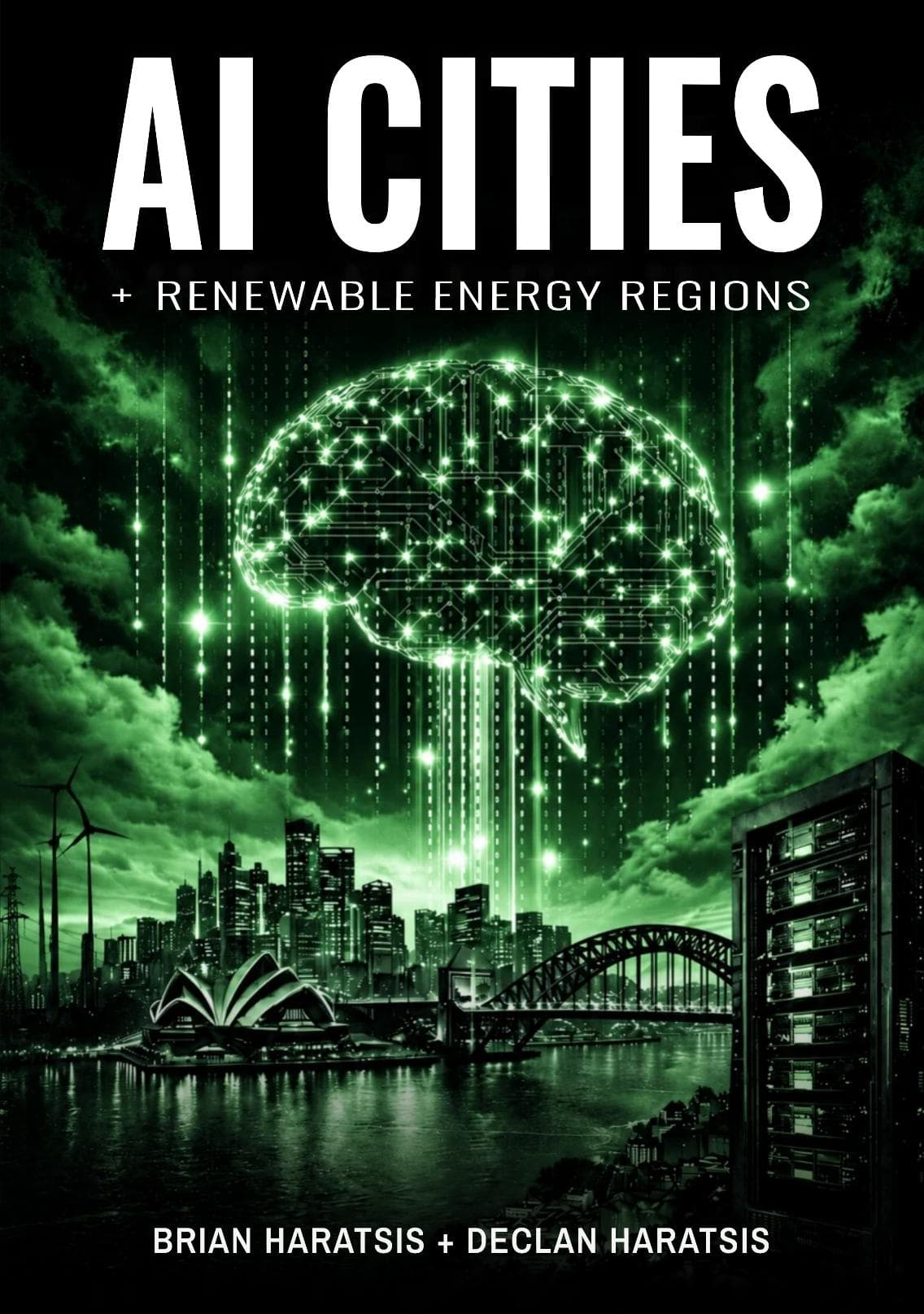
How AI and renewable energy could reshape where Australians live, work and build.
01 / The argument
Australian cities have been shaped by a familiar idea: bring jobs and services together, then connect people to the centre. AI, hybrid work and renewable energy are changing the reasons different activities choose a location.
Brian Haratsis and Declan Haratsis explore what happens when more work can be coordinated at a distance, while computing and industry cluster around the infrastructure they need.
The CBD remains important. But it becomes one part of a wider network, with a different role to play.
Introduction · The AI City
What changes with AI?
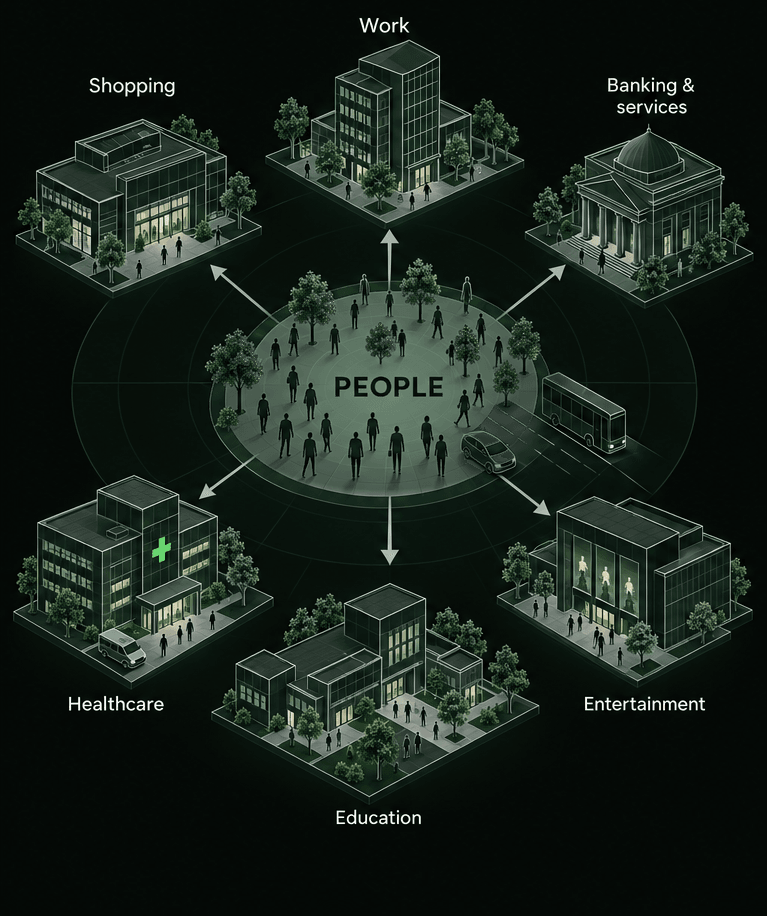
The twentieth century was organised around moving people to jobs.
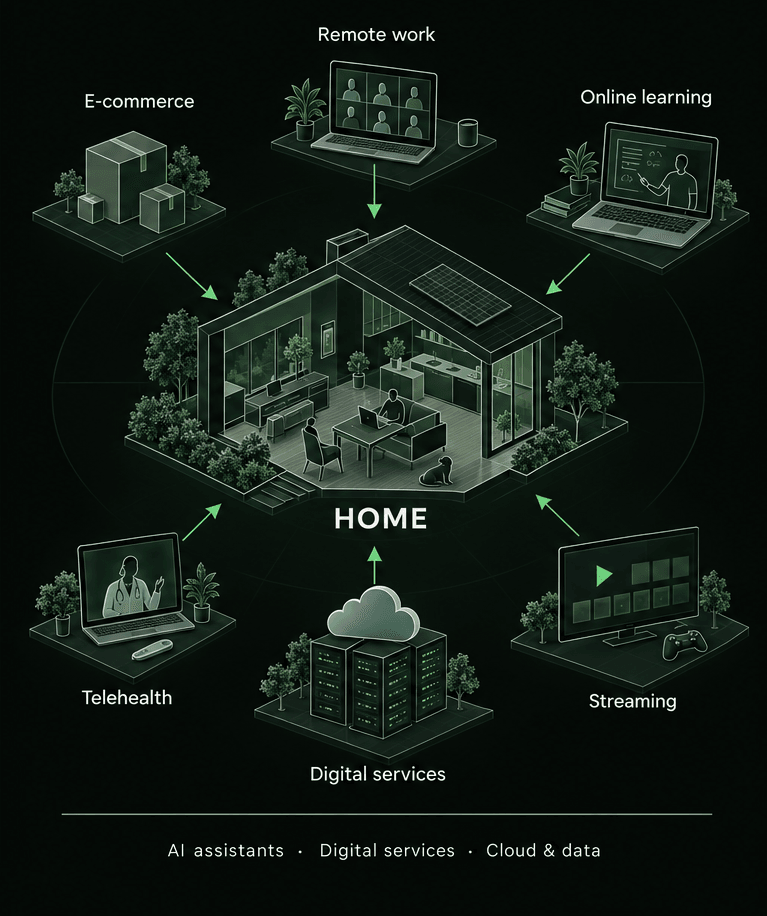
The AI City is organised around moving knowledge to wherever it creates the greatest value.
The authors call this the hyper-distributed city: places that are physically spread out, but operate as a digitally connected economy.
Together, an investment wave the authors say is likely to rival the mining boom, and to reshape where Australia grows from 2026 to 2040.
From the book · Introduction
02 / A geography of different roles
These are overlapping roles, rather than seven separate cities. They carry different weight and develop at different speeds. A single place may combine several, shaped by its existing strengths and connections.
“None of this implies that geography stops mattering. It implies that it starts mattering for different reasons.”
Strategy, collaboration, culture and major institutions remain important. The centre’s role changes as routine work becomes less dependent on an office.
Homes support more professional work and everyday activity. That changes housing needs, local demand and access to wider employment markets.
Existing neighbourhoods, business parks and industrial precincts adapt. Their buildings, infrastructure and available land shape what can happen next.
Research and specialised production gather around universities, ports, airports and defence precincts. Shared skills and facilities still make proximity valuable.
Data centres need power, fibre and cooling. Freight needs transport connections. These distinct requirements anchor activity in particular places.
New districts offer room to plan homes, employment and infrastructure together, before land use and subdivision make change more difficult.
Generation, transmission and industrial land can support new regional activity when connected to the businesses and communities able to use them.
The question becomes: what can this place support, and which connections would make that possible?
Chapter 1 · The AI City03 / Read the full argument
Australian cities are no longer growing the way their plans expect. The book traces how AI, remote work and renewable energy are changing where people live, work and invest, and how planning and government can respond.
04 / From ideas to decisions
Long-lived infrastructure still needs forecasts and coordinated investment. The book argues for combining that planning with the ability to adapt as technology, markets and community needs change.
Protect essential land and corridors. Keep buildings, detailed uses and delivery sequences flexible where possible. The authors call this optionality.
The optionality test
Governing the Hyper-Distributed City
“Does this decision preserve or reduce the city’s ability to adapt over the next 50–100 years?”
Government & planners
Consider the corridors, networks and land that take years to deliver, alongside changing patterns of housing, work and access to services.
Developers & landowners
Bring market demand together with power, access, surrounding uses and infrastructure. Consider how the land or buildings could be used differently later.
Investors & infrastructure
Examine how energy, digital and freight systems depend on one another, who benefits, and which other investments an opportunity needs.
Macroplan
Macroplan’s economists, analysts and planners work with landowners, developers and policy makers on growth across Australia’s cities and regions.
Connect these ideas to the decisions facing your city, region or site.